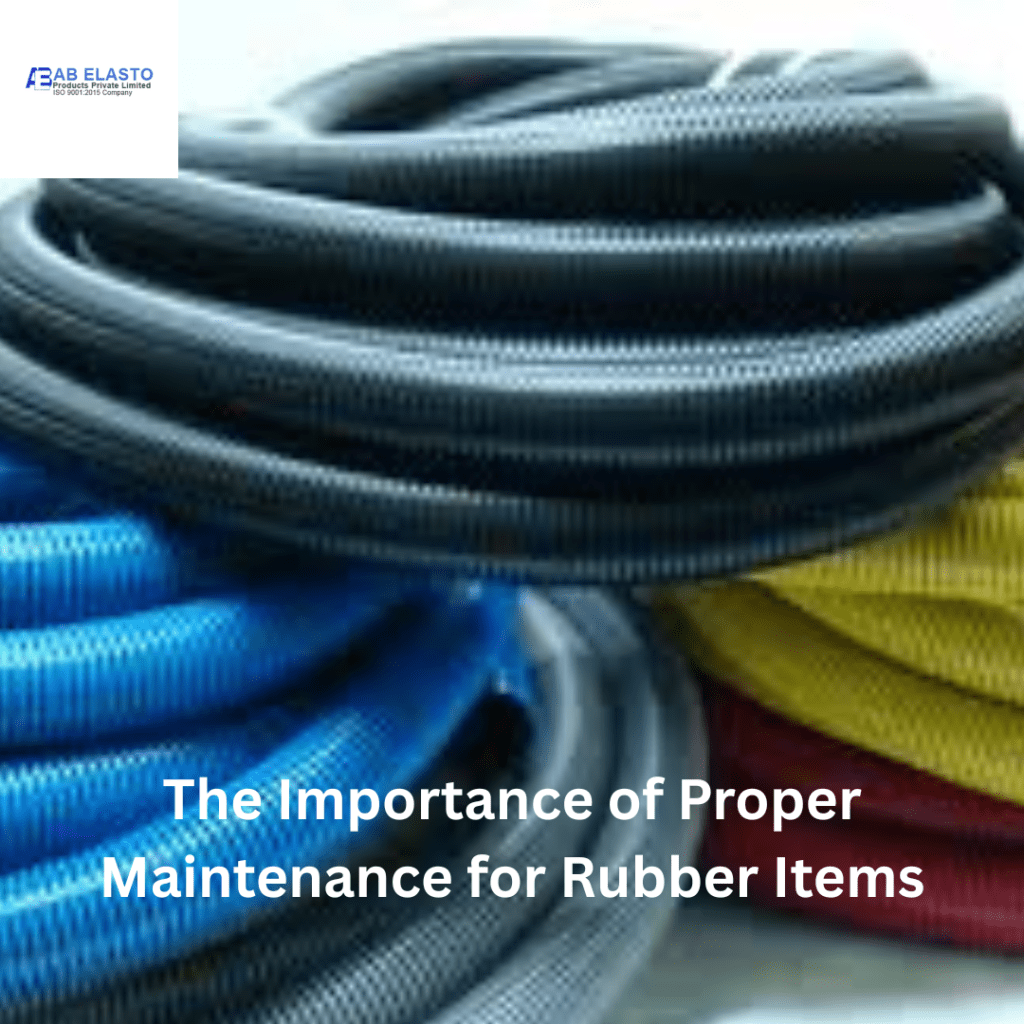
From automotive and medical applications to consumer goods, rubber products are crucial in almost every industry. They play an important role in production and control overall safety, too. Generally, these products are durable and long-lasting. However, like any material, rubber requires regular maintenance and care to preserve its performance and longevity.
As an owner, if you believe that only partnering with leading industrial rubber manufacturers can help you, it is not. You must follow a maintenance and care routine. Negligence can lead to deterioration, damage and reduced functionality.
General Guidance Regarding Rubber Maintenance
Rubbers are usually durable and serve for years. However, according to a leading manufacturer of industrial rubber products in India, the environment can cause wear and tear easily. Following a few basic maintenance practices can help keep components in optimal condition.
Regular Cleaning
Due to regular usage, the dirt, grime and chemical buildup are common. It can accelerate the ageing process of rubber. Hence, cleaning it daily is crucial to protect its lifespan. You can use a mix of mild soap and water to clean it. Strictly avoid harsh cleaners, solvents or abrasive tools as they can cause permanent damage.
Exposure to Extreme Temperature
An exposure to extreme temperatures, such as excessive heat or extreme cold, directly impacts the rubber’s flexibility and structural integrity. With time, it can lead to wear and tear, a crack, hardening or shrinking. To avoid these incidents, store rubber components in a cool, dry environment. Never place them near a heat source or sunlight.
Prevent Ozone Exposure
Whether it is the ozone in the air or the industrial setting, ozone can break rubber at the molecular level. It leads to surface cracks and reduced elasticity over time. Does your setting have a higher ozone amount? Apply a rubber conditioner or use products formulated with ozone inhibitors for added protection.
Regular Inspection
Even if you maintain all the mentioned factors, wear and tear or other issues are common due to ageing factors. To prevent an operation failure, regular inspection is crucial. Look for signs like cracking, brittleness or soft spots. Replace them if wear becomes visible or function is compromised.
In industries like automotive, transportation, and manufacturing, the rubber is used in a higher stress environment than in other applications. Parts like bushings, belts, seals and hoses remain exposed to constant heat, mechanical friction and harsh chemicals. These factors can accelerate wear. Hence, rubbers need special supervision or protection in these conditions.
Applying rubber-safe protectants can help shield against thermal breakdown and chemical exposure. Additionally, regular inspection is highly important in these environments. Always looking for signs like cracking, hardening, soft spots or a noticeable loss of elasticity. If one of these signs appears, it is best to replace it. Early replacement helps to avoid costly failures.
As an owner, you must focus on the right storage technique, too. It also helps in controlling lifespan. Always store rubber in a cooler environment. Keep them away from light, heat, humidity, ozone exposure, and moisture.
Connect with a leading manufacturer of industrial rubber products in India to gain valuable insights.
 Ab Elasto